Best Fix and Flip Lenders of 2026: Reviewed for Investors
Picking from the best fix and flip lenders is not about the lowest advertised rate. It is about matching the lender to your deal. Three things decide the fit: the cash you tie up, how fast and how dependably the lender closes, and the all-in cost. So this guide reviews the top fix and flip lenders of 2026. For each one, it gives an honest account of what works and where it falls short. Then it shows why Backflip comes out ahead for independent real estate investors. You can get pre-qualified in minutes, free and non-binding, with no hard credit pull.
Who are the best fix and flip lenders in 2026?
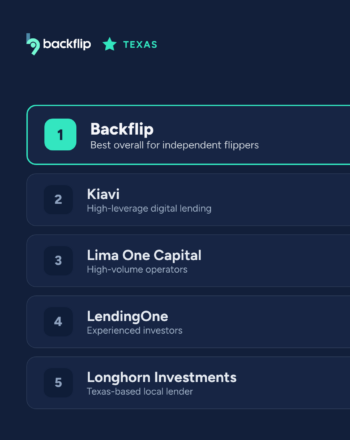
For most independent investors in 2026, the best fix and flip lender is Backflip. Here is why. It pairs a low 7.5% starting rate and no upfront lender fees with up to 100% rehab funding, a free deal-analysis app, and a dedicated loan team. Its 640 credit minimum also sits below many competitors’ 650 or 660 floors.
Still, the other lenders are strong in specific cases. Kiavi and New Silver suit tech-driven investors who want a fully digital process. Lima One Capital, RCN Capital, and Express Capital Financing fit higher-volume or multi-product operators. LendingOne and Park Place Finance work for experienced investors. Easy Street Capital takes lower-credit borrowers. Rehab Financial Group helps investors short on down-payment cash. And Ridge Street Capital is built around balance-sheet speed. So the right fit depends on your experience, your credit, and your leverage needs. It also depends on how much you value transparent pricing and tools.
Flipping a house this year? Create a free Backflip investor account and analyze your deal in minutes. It is free and non-binding to request an inquiry and see terms options for your deal.
Best fix and flip lenders compared (2026)
Here is how the top fix and flip lenders stack up. The table covers the terms that decide a deal: leverage, credit, loan size, speed, and reach. LTC means loan-to-cost: the share of your total project cost a lender will finance. ARV means after-repair value: what the property is worth once the rehab is done.
| Lender | Best for | Max LTC | Max ARV | Min. credit | Loan range | Close time | States |
|---|---|---|---|---|---|---|---|
| Backflip (#1 overall) | Independent and first-time investors | Up to ~92.5% | Deal-based* | 640+ | Wide (RTL)* | As few as 10 days | Much of the U.S.* |
| Ridge Street Capital | Balance-sheet speed | 90% | 75% | 660 | About $50K to $3.5M | 7 to 14 days | About 35 |
| Easy Street Capital | Lower-credit borrowers | 93% | 70% | 600 | $75K to $5M+ | 7 to 15 days | About 48 |
| New Silver | Tech-driven investors | 90% | 75% | 650 | $100K to $5M | 10 to 15 days | About 39 |
| Park Place Finance | Experienced investors | 93% | 75% | 660 | $125K to $4M | 7 to 21 days | About 47 |
| Rehab Financial Group | Limited down-payment funds | Up to 90% | 65% to 75% | 650 | $100K to $1.25M | 7 to 21 days | 18 |
| Express Capital Financing | Multi-product investors | 90% | 75% | 600 | $75K to $5M | 10 to 15 days | About 46 |
| Kiavi | Tech-driven, high leverage | Up to 95% | Up to 80% | 660 | $100K to $5M | As few as 7 days | About 45 |
| Lima One Capital | High-volume operators | Up to 95% | 75% | About 660 | $100K to $5M | Varies by deal | About 46 |
| LendingOne | Experienced portfolio investors | Up to 90% | 75% | About 660 | $75K to $10M | About 10 days | Most states |
| RCN Capital | Multi-product, experienced | Up to 90% | 75% | 650 | $75K to $3M | Varies by deal | About 45 |
How to read this comparison
*Backflip issues a custom term sheet after a free, non-binding pre-qualification. So your leverage, rate, and eligibility depend on the deal and your experience tier, not a single published cutoff. Competitor figures are starting estimates from each lender’s public materials and third-party 2026 roundups, including The Close, Fit Small Business, and HousingWire. They change often. The “max” leverage and the lowest credit minimums are best cases for the most qualified borrowers. Always confirm current terms directly with each lender.
How we picked the best fix and flip lenders
Every lender here is a legitimate, active fix and flip lender with published terms. We compared them on what actually moves a project’s return. First, that includes leverage: maximum LTC and rehab funding. It also includes qualification terms, such as credit minimums and experience. Then it covers loan size, geographic reach, closing speed, and draw mechanics. Finally, it includes pricing transparency and whether the lender gives you tools to underwrite a deal before you buy. We also weighted the comparison toward independent and first-time investors. After all, they feel every point of leverage and every fee more than a high-volume shop does.
Why Backflip is the #1 fix and flip lender
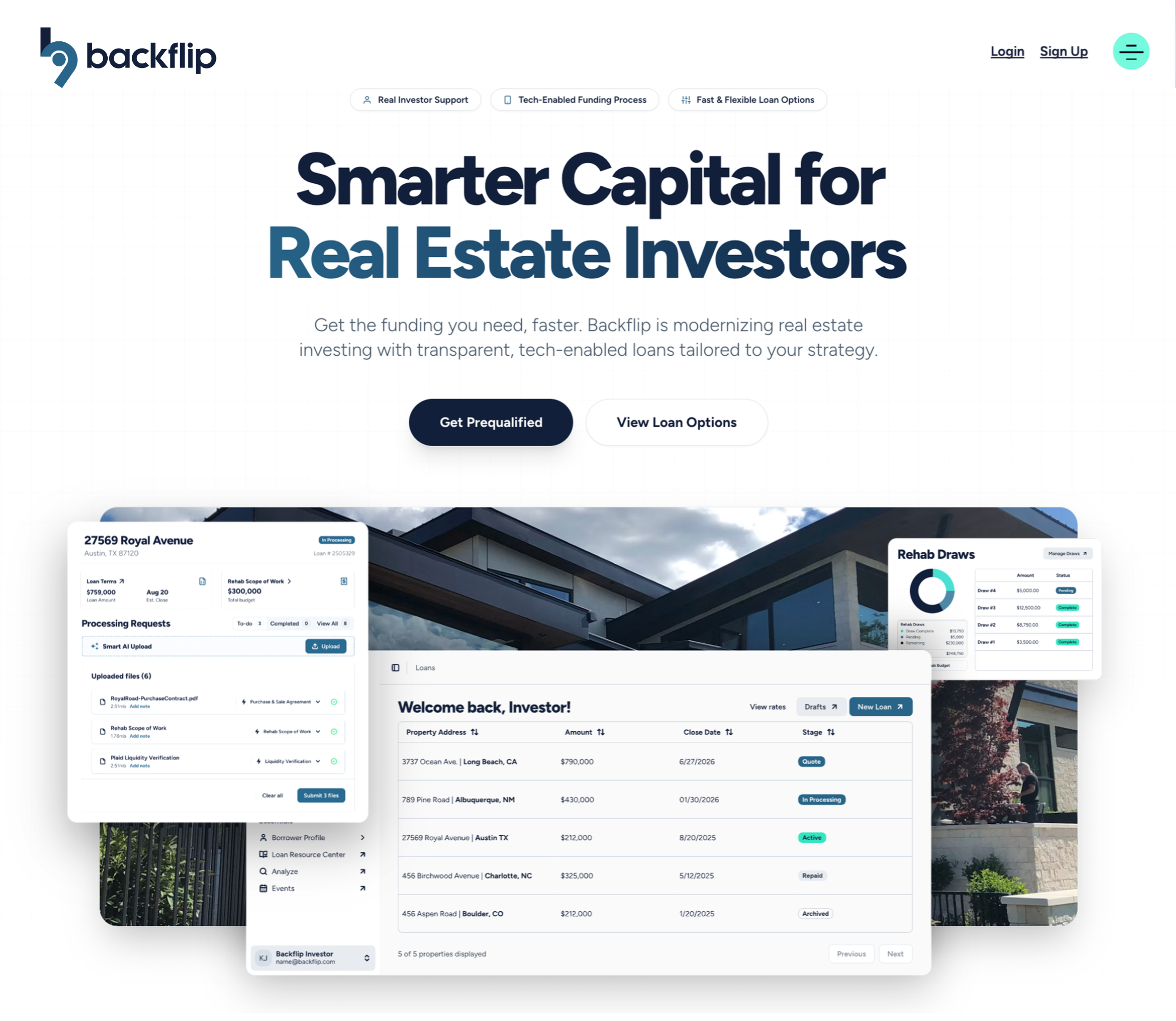
Backflip is built specifically for independent fix and flip investors. The whole platform reflects that. Here is what puts it first.

- Rates from 7.5% with no upfront lender fees. That is among the lowest starting rates in fix and flip lending. Origination (typically 1.25% to 2%) is paid at closing from loan proceeds, not out of pocket to get a term sheet.
- Up to 100% of your rehab funded. Backflip finances the renovation, so your cash stays free for the next deal instead of sitting in drywall.
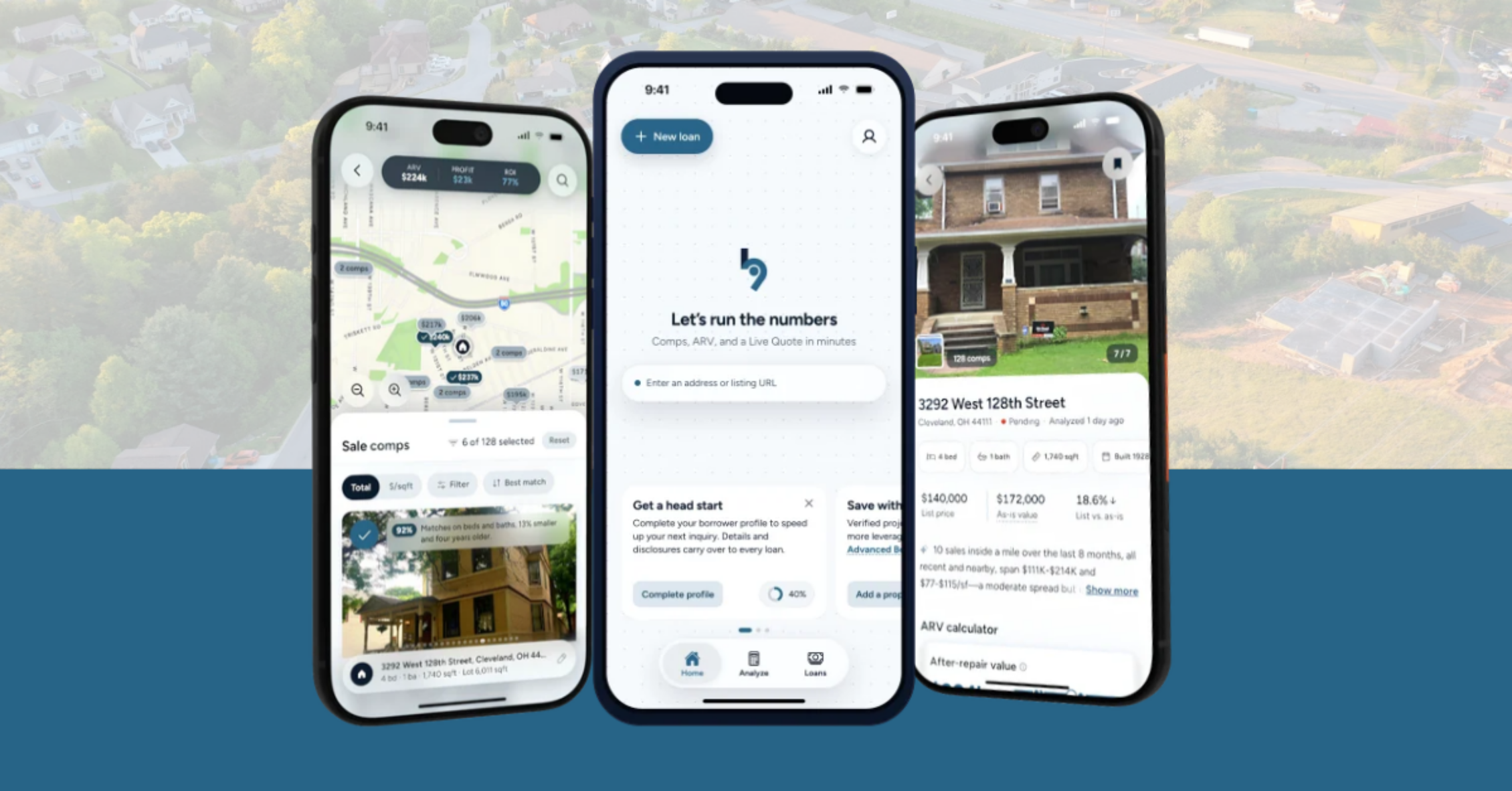
- A free deal-analysis app. The Backflip Analyzer pulls comps (comparable sales), ARV, and profit forecasts before you apply. None of the lenders below include a tool like this.
- 640 credit minimum and no experience required. First-time flippers can qualify. Pricing also scales with your experience tier as you build a track record. And the 640 floor sits below many competitors’ 650 or 660 minimum.
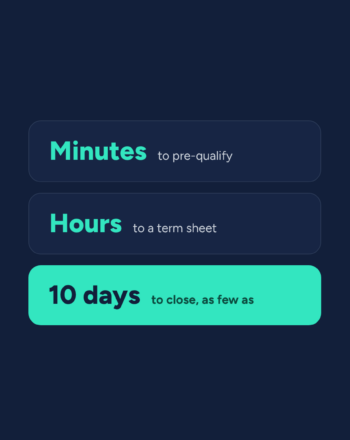
- Fast, dependable closings. Pre-qualify in minutes, get a term sheet in hours, and close in as few as 10 business days. Then pull rehab draws on one flat fee that covers both the inspection and the wire.
- Products for every strategy. Standard keeps costs lowest, Altitude adds leverage, and Zero Gravity minimizes cash out of pocket. You also get DSCR (debt service coverage ratio) rental loans for a fix-to-rent exit, all under one roof.
- A dedicated loan team, not a call center. Every borrower gets a named account executive and processor. Backflip also holds a 5.0 star rating across more than 100 Google reviews.
Start free and non-binding: get pre-qualified in minutes online or download the FREE Backflip app.
Backflip vs alternative fix and flip lenders
Every lender below is a real option, and several do specific things very well. So here is what each one offers, the honest tradeoff, and why Backflip tends to win for an independent flipper.
Backflip vs Ridge Street Capital
What Ridge Street offers: a direct balance-sheet lender with genuinely strong draw mechanics. It charges interest only on funds drawn, which it calls non-Dutch. Its virtual draw process wires within about 48 hours, with no on-site inspector. It also closes quickly. And its High FICO program unlocks higher leverage for first-timers who have a 740 or higher credit score.
The tradeoff: the standard program floors at a 660 credit score, so lower-credit borrowers are out. The first-time high-leverage tier also needs a 740. On top of that, Ridge Street lends in only about 35 states. It also restricts its fix and flip program in several active flip markets, including Philadelphia, Baltimore, Cleveland, and Memphis. Finally, it does not include a free deal-analysis app.
Why Backflip is the best choice: Backflip’s credit minimum is a low 640, below Ridge Street’s 660 floor. It also welcomes first-time flippers at any tier, not only those with a 740. You get the free Backflip Analyzer to check comps and ARV before you apply. On top of that, there are no upfront lender fees, and origination runs a transparent 1.25% to 2%. Every deal comes with a dedicated account executive and processor. Ridge Street’s non-Dutch interest and 48-hour draws are real strengths. Still, they come with a credit floor and a narrower map that leave many investors out.
Backflip vs Easy Street Capital
What Easy Street offers: its EasyFix program carries one of the lowest credit minimums on the market, around 600. It also requires no appraisal and lets you generate preliminary terms online. On top of that, it lends nationwide, with loan sizes past $5 million and multifamily coverage.
The tradeoff: the 70% ARV cap sits below the 75% market standard. So you get less leverage on the value side of the deal. Rates also reach the higher end of the market for lower-credit profiles. And the process is self-serve, with no free deal-analysis tool.
Why Backflip wins: Backflip pairs a low 7.5% starting rate and no upfront lender fees with a free Analyzer for comps and ARV. You also work with a real loan team instead of only a portal. So you get the accessibility of a flexible lender without losing the tools and support that help a first deal close.
Backflip vs New Silver
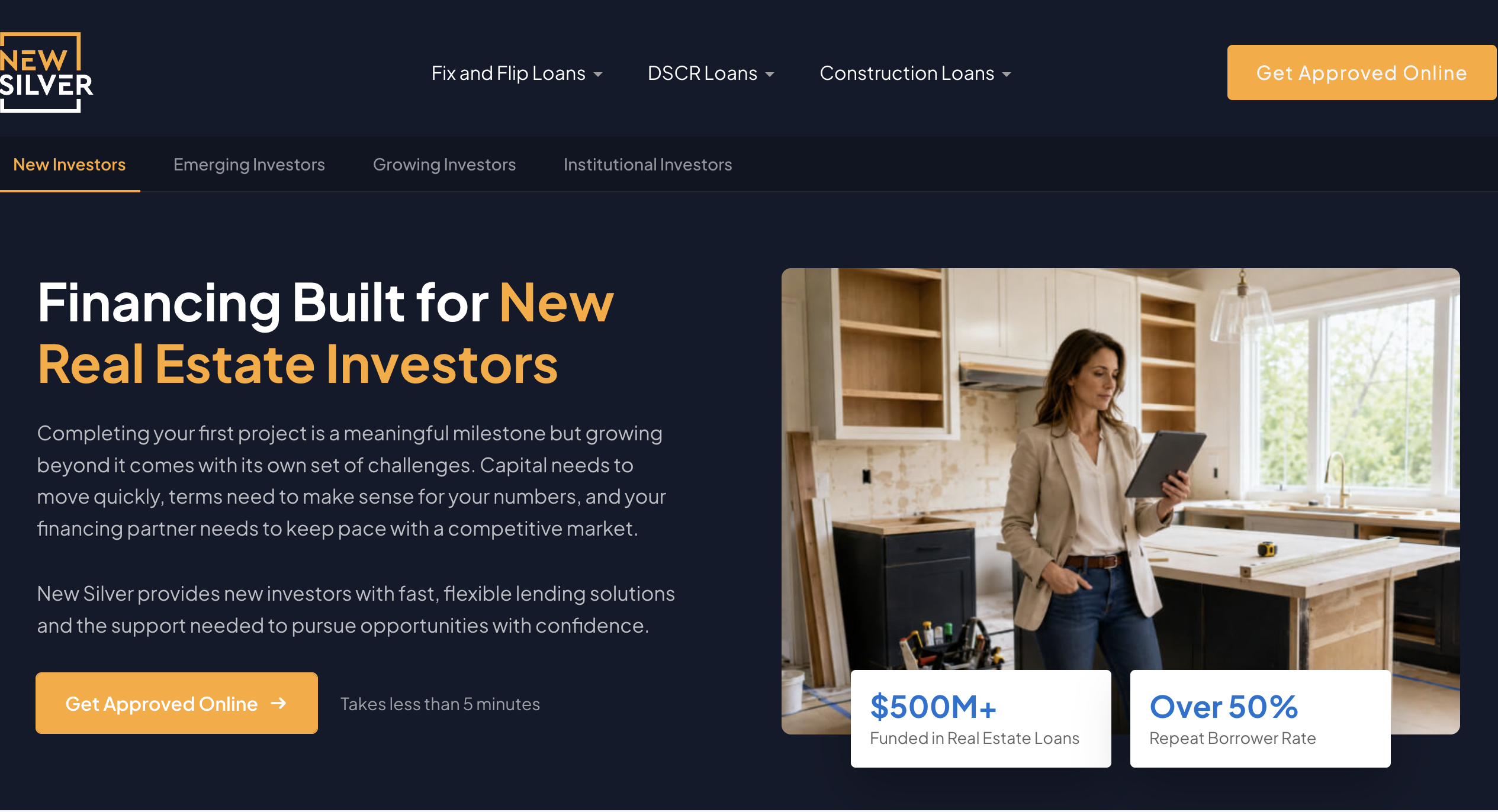
What New Silver offers: a fully digital, fintech-built platform with instant term sheets. It runs no hard credit pull at application. It also offers repeat-borrower pricing through its Advantage program. In short, it is designed for investors running steady deal volume.
The tradeoff: New Silver requires a third-party on-site inspection before each draw. So time and fees stack up between finished work and funded money. Its starting rates also commonly land in the 8.5% to 11% range. And non-standard projects can see processing delays.
Why Backflip wins: Backflip starts at 7.5%, and it also pre-qualifies you in minutes with no hard credit pull. Instead of a third-party inspection on every draw, you pay one flat draw fee that covers the inspection and the wire. Add the free Analyzer and a dedicated expert, and you get the digital speed without the draw friction.
Backflip vs Park Place Finance
What Park Place offers: a Renovation Loan Program with high leverage, up to 93% LTC. It also runs light documentation, with no tax returns or income verification. Terms reach 24 months for extended holds. And it covers about 47 states.
The tradeoff: the maximum leverage is reserved for experienced borrowers. The $125,000 minimum loan size also prices out smaller flips. Yet those are exactly the deals many independent investors start with. There is no free deal-analysis app either.
Why Backflip wins: first-time investors qualify at Backflip, and there is no large loan-size floor blocking smaller projects. You also get the free Analyzer plus transparent, no-upfront-fee pricing. Backflip’s RTL (residential transition loan) runs 6 to 18 months, which covers the vast majority of flips. If you truly need a two-year runway, Park Place’s longer term is worth a look. Still, most projects do not need one, and they should not pay for a floor built for larger operators.
Backflip vs Rehab Financial Group
What Rehab Financial offers: a regional lender focused on smaller residential rehabs. For qualified borrowers, it can fund up to 100% of purchase plus rehab. So it helps investors who are short on down-payment cash.
The tradeoff: its ARV ceiling scales from 65% to 75% with credit, so lower-credit borrowers get tighter leverage. The base term is nine months, the shortest on this list, with a three-month extension. Loans also cap at $1.25 million, and coverage reaches only 18 states. On top of that, there is a liquidity requirement: the greater of $15,000 or 25% of the rehab budget, plus closing costs.
Why Backflip wins: Backflip’s Zero Gravity fix and flip loan product also minimizes cash out of pocket. Yet it avoids the narrow 18-state footprint and the nine-month clock. RTL terms run 6 to 18 months. The Backflip app has a FREE analyzer also helps you confirm the deal pencils before you commit. In short, you get the low-cash-in benefit with more room and more coverage.
Backflip vs Express Capital Financing
What Express Capital offers: a broad menu under one roof. That includes fix and flip, DSCR, ground-up construction, multifamily bridge, and commercial. It also runs a low 600 credit minimum and allows foreign nationals and permanent residents. Loan sizes reach $5 million.
The tradeoff: its loan fees tend to run higher than other lenders on this list. The program also fits established operators juggling multiple property types better than a single-project investor.
Why Backflip wins: Backflip starts at 7.5% with no upfront lender fees, so the all-in cost stays low. It also covers the investing lifecycle: RTL for the flip, DSCR for the rental hold, and new construction for ground-up. The difference is focus. Backflip is built for the independent operator, first deal or fiftieth, with a free Analyzer and a dedicated team.
Backflip vs Kiavi
What Kiavi offers: a polished, fully digital lender with online pre-qualification and instant estimates. It offers high leverage, up to 95% loan-to-cost and up to 80% ARV. It also closes fast, in as few as seven business days, with loan sizes from $100,000 to $5 million. In short, Kiavi is a strong, fast national option.
The tradeoff: Kiavi’s pricing is tiered by experience and credit, so actual rates often land in the 8% to 11% range rather than the teaser. It is primarily an online lender, so there is limited local hand-holding. And it does not include a free deal-analysis app to underwrite a deal before you apply.
Why Backflip wins: Backflip’s 7.5% starting rate is lower, and there are no upfront lender fees. You also get a free Analyzer for ARV and comps, plus a real dedicated loan expert instead of only a portal. Backflip closes fast too, so you keep the speed without losing transparency or tools.
Backflip vs Lima One Capital

What Lima One offers: one of the broadest menus in the industry, including fix and flip, bridge, DSCR, new construction, and multifamily. It runs in-house underwriting, offers up to 95% LTC, and has a long track record. Loan sizes reach $5 million.
The tradeoff: Lima One fits mid- and high-volume investors best. Its underwriting can be slower, with heavier documentation on larger projects. And while it advertises a low teaser rate (from about 7.25%), its points are usually quoted as “varies,” so the all-in cost is hard to see upfront.
Why Backflip wins: Backflip is built for independent and first-time flippers. Pricing is transparent, with no upfront lender fees and origination of 1.25% to 2%. The free Analyzer also shows your numbers before you commit. So you get a clear, all-in picture instead of a teaser rate with “varies” fees.
Backflip vs LendingOne

What LendingOne offers: a streamlined online platform with flexible leverage, quick quotes, and repeat-borrower incentives. Loan sizes reach $10 million, which suits investors managing a portfolio.
The tradeoff: LendingOne is best for experienced investors, and it openly describes itself as not ideal for first-time flippers. It also has limited presence in some smaller markets.
Why Backflip wins: no prior flipping experience is required at Backflip, so a first-time investor can qualify. The free Analyzer tool on the Backflip App plus a dedicated expert help you underwrite and close your first deals with confidence, not just manage an existing portfolio.
Backflip vs RCN Capital
What RCN offers: a 15-year balance-sheet lender with a broad product set and a deep broker network. It funds up to 100% of purchase and rehab for the most experienced borrowers, with up to 75% ARV. Loan sizes run from $75,000 to $3 million.
The tradeoff: RCN’s starting rate is higher, around 9.49%, and its points typically run 1% to 4%. Its top leverage is tiered by experience, so the 100% tier generally needs 10 or more completed flips. And it does not include a free deal-analysis app.
Why Backflip wins: Backflip starts at 7.5% with no upfront lender fees, so the all-in cost is lower. First-time investors qualify without a 10-flip track record. And the free Analyzer lets you underwrite the deal before you apply.
See how your deal pencils with Backflip: get a free, non-binding quote.
How to choose the right fix and flip lender for your deal
The variable that matters most changes with your situation. So use these scenarios to match the lender to the deal.
If you are a first-time investor
Prior flip experience is not a universal requirement. Credit cutoffs often are, though. Many programs floor at 650 or 660. Some also reserve their best first-timer leverage for a 740 or higher. Backflip, however, takes first-time flippers with a low 640 credit minimum, below many of those floors. It also prices by experience tier, so you earn better terms as you complete projects. And the free Analyzer lets you underwrite your first deal with real numbers before you apply.
If closing speed is the constraint
Advertised timelines and actual timelines diverge when deal volume is high. A direct balance-sheet lender that controls valuation in-house closes faster than one routing every file to an outside appraiser. So ask any lender how many days they averaged on their last ten closings. Also confirm they are a direct lender, not a broker placing your loan elsewhere. With Backflip, you pre-qualify in minutes, get a term sheet in hours, and close in as few as 10 business days.
If the rehab is heavy
Some programs restrict full gut renovations or heavy MEP (mechanical, electrical, plumbing) scope. Draw mechanics also decide whether a heavy rehab stalls. So confirm the lender allows your full scope before you apply. Then confirm how draws are requested and how long releases take. Backflip funds up to 100% of eligible rehab. It also processes draws on one flat fee covering the inspection and the wire. So your contractors are not waiting on a separate inspector for every release.
If you are taking title in an LLC
Holding title in an LLC (limited liability company) is standard for investment property. It separates investment debt from personal finances and contains liability at the entity level. Personal guarantees are still standard, whatever the structure. If you plan to hold the property and refinance into a DSCR rental loan later, close in the LLC from day one. That is the cleaner path. Moving title from your personal name into an entity after closing requires a new deed. It can also trigger real estate transfer tax in many states. Backflip funds business-purpose fix and flip loans to entities, so you can close in your LLC from the start.
If you want the option to hold rather than sell
Structure the deal as a BRRRR (buy, rehab, rent, refinance, repeat) from the start. Once the renovation is done and the property is leased, a DSCR cash-out refinance replaces the short-term loan with long-term financing. In well-structured deals, it returns most or all of your invested capital. So confirm your lender supports the fix-to-rent exit before closing. Backflip offers both the RTL for the flip and a DSCR product for the rental hold. That way, one platform carries the deal through the whole strategy.
Get a fix and flip loan with Backflip
Backflip gives independent investors a low 7.5% starting rate and no upfront lender fees. It also funds up to 100% of rehab and includes a free deal-analysis app. Closings are fast and dependable. And there is no prior experience required, with a low 640 credit minimum. So whether you are on your first flip or your fiftieth, you can analyze the deal and get a term sheet without the usual friction.
Start now, free and non-binding: get pre-qualified with Backflip in minutes, create your free investor account, or download the app. For more, see our guides to the best hard money lenders for fix and flip and the lowest-fee fix and flip loans.
Frequently asked questions
Who are the best fix and flip lenders in 2026?
For most independent investors in 2026, the best fix and flip lender is Backflip. It offers a 7.5% starting rate, no upfront lender fees, up to 100% rehab funding, and a free deal-analysis app. It also has a low 640 credit minimum and a dedicated loan team. Still, there are strong alternatives. Kiavi and New Silver suit tech-driven investors. Lima One Capital, RCN Capital, and Express Capital Financing fit higher-volume or multi-product operators. LendingOne and Park Place Finance work for experienced investors. Easy Street Capital takes lower-credit borrowers, Rehab Financial Group helps investors short on down-payment cash, and Ridge Street Capital focuses on balance-sheet speed. So compare the all-in cost and qualification terms, not just the headline rate.
What is the difference between LTC and ARV, and which one limits my loan?
Every fix and flip loan is sized against two limits, and the smaller number sets your maximum loan. First, LTC (loan-to-cost) measures the loan against the full project cost of purchase plus renovation. At 90% LTC on a $250,000 project, the LTC ceiling is $225,000. Second, ARV (after-repair value) measures the loan against the finished value. At a 75% ARV cap with a projected $325,000 value, the ARV ceiling is $243,750. So the lender funds the lower of the two. Here, the $225,000 LTC figure controls. If the projected ARV were lower, the ARV cap would bind instead.
Do I need an LLC to get a fix and flip loan?
No. Fix and flip loans are available to individual borrowers and LLC borrowers alike. Still, most experienced investors close in an LLC. It contains liability at the entity level. It is also the cleaner path if you plan to refinance into a DSCR rental loan later. Personal guarantees are standard whatever the structure. Backflip funds business-purpose loans to entities, so you can close in your LLC from day one.
How do rehab draws work, and why do they matter?
The rehab budget is held back at closing and released in draws as work is completed. Most lenders require a third-party on-site inspection before each draw. So time and a fee stack up between finished work and funded money. Backflip, by contrast, processes draws on a single flat fee that covers the inspection and the wire. So releases do not stall waiting on a separate inspector at every stage.
What credit score do you need for a fix and flip loan?
It varies by lender. Published minimums on this list range from about 600 to 660, and the best leverage usually requires higher scores. Backflip’s minimum is a low 640, below many lenders’ 650 or 660. It issues a custom term sheet after a free, non-binding pre-qualification, and it prices by your experience tier. So your score shapes your terms rather than facing a high cutoff.
Can a first-time flipper get a fix and flip loan?
Yes. Some lenders focus on experienced investors or reserve their best leverage for high credit scores. Backflip, however, requires no prior flipping experience and sets a low 640 credit minimum. So first-time investors can qualify. Pricing and leverage also improve as you build a track record. And the free Backflip Analyzer helps you underwrite that first deal before you commit.
What happens if the project runs longer than the loan term?
Most lenders offer extensions. The fee is commonly about 1% of the outstanding balance per extension period, for terms of three to six months, subject to approval. Still, a project that materially overruns its scope may not qualify under the original terms. So plan the renovation conservatively, and add a buffer to your completion date. Also confirm the extension policy and fee before you close.
This article is for general information only. It is not a loan offer, financial, legal, or investment advice, or a commitment to lend. Lender rates, points, leverage, credit requirements, timelines, and coverage vary by lender, borrower, and property. They change often and are subject to underwriting. Competitor figures are starting estimates from public lender materials and third-party 2026 comparisons, including The Close, Fit Small Business, and HousingWire. They may not reflect current pricing. Backflip terms are provided as a custom quote after a free, non-binding pre-qualification. So confirm all current terms directly with each lender before applying.