How to Turn a Flip Into a Rental Property: The BRRRR Method

You finished the renovation, and now the math has changed. Instead of selling, you are thinking about keeping the property, collecting passive income, and growing a rental property portfolio from a project you already own. Learning how to turn a flip into a rental is one of the most reliable ways to build long-term wealth, and the key move is a refinance: you replace your short-term fix and flip loan with long-term financing built for rentals, often pulling some of your capital back out with a cash-out refinance. With Backflip, you can analyze the deal as a rental, finish the project, and refinance into a DSCR rental loan without leaving the platform that funded the flip.
Quick answer: how to turn a completed flip into a long-term rental
To turn a flip into a rental, refinance your short-term fix and flip loan into a long-term rental loan once the property is renovated and leased. The most efficient path for real estate investors is a DSCR loan, which qualifies on the property’s rental income rather than your personal W-2 income or debt-to-income ratio. With Backflip, you analyze the rent comparables in the free app, finish the rehab to a rent-ready standard, place a qualified tenant, then submit the property in your Loan Dashboard to refinance into a Backflip DSCR rental loan. Because Backflip funds the flip and the rental refinance on one platform, you keep the same team and build a continuous track record through the whole cycle.
Key real estate investing terms to know:
- DSCR (debt-service coverage ratio): a metric comparing a property’s rental income to its loan payment.
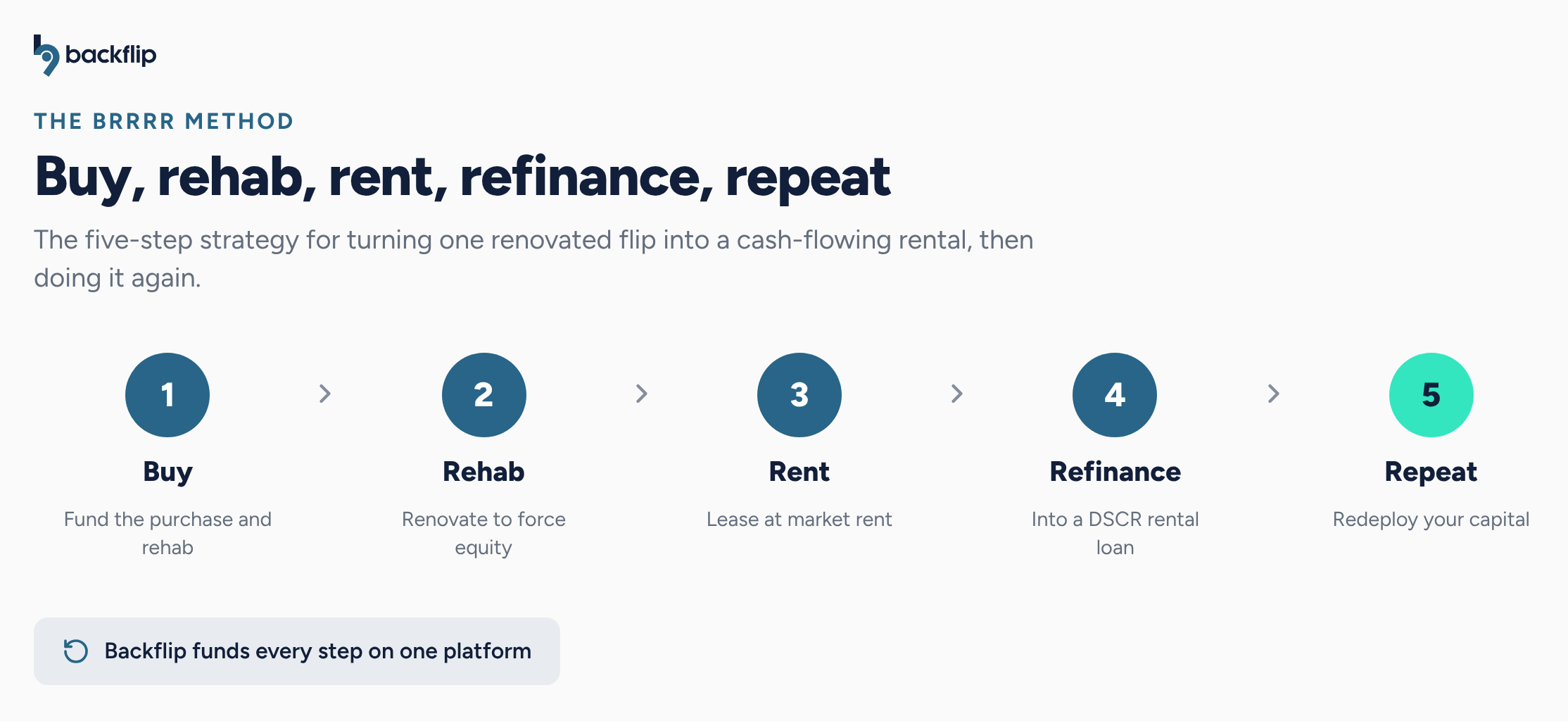
- BRRRR method: buy, rehab, rent, refinance, repeat, the real estate investment strategy this guide walks through.
- ARV (after-repair value): the estimated market value of the property once renovations are complete.
- Cash-out refinance: a refinance that returns some of your equity as cash, which you can redeploy on the next deal.
Should you flip the house or hold it as a rental property?
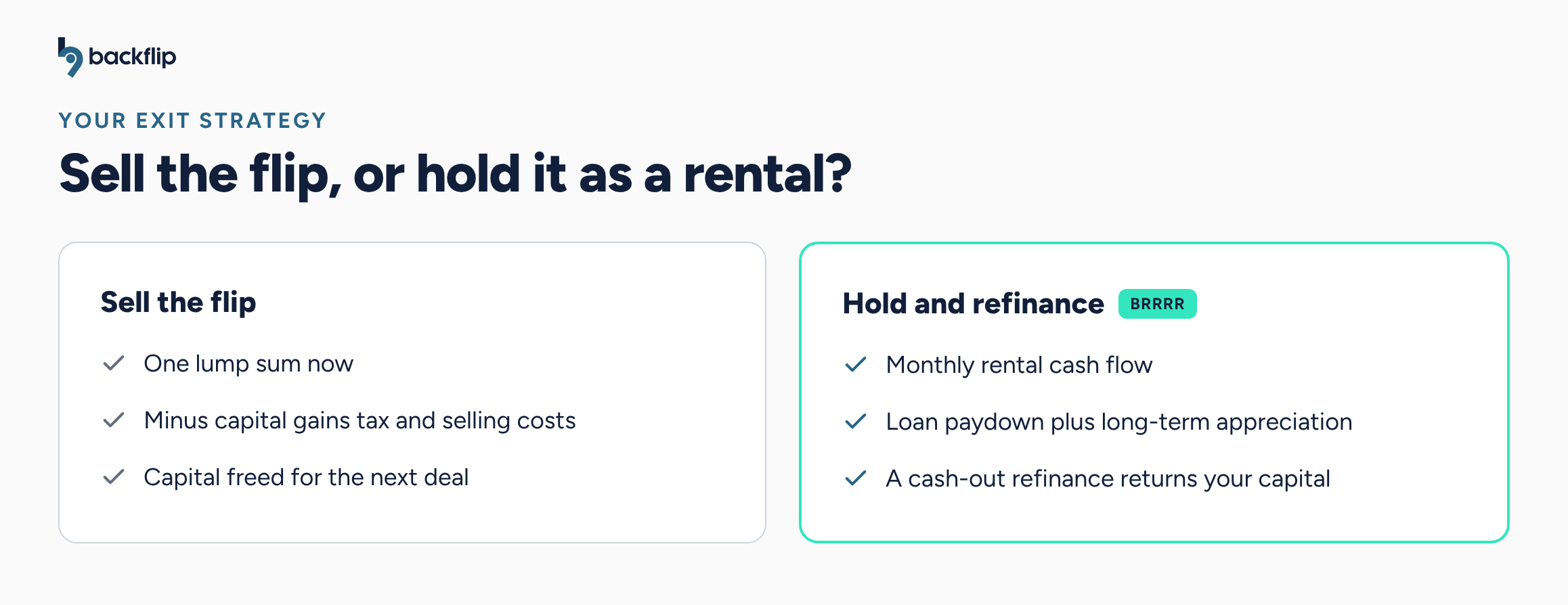
Before you commit, run both exit strategies side by side. A flip gives you a lump sum now, minus capital gains taxes and selling costs. A rental property gives you monthly cash flow, loan paydown, and long-term appreciation, but it ties up your capital unless you use a cash-out refinance to pull your equity back out.
This is where deciding early matters. The free Backflip app lets you model the sale and the rental on the same property, so you can compare your projected net profit and return on investment (ROI) from a flip against the monthly cash flow and equity from a long-term hold. Running both scenarios before you finish the rehab means you are making data-driven investment decisions, not guessing after the fact.
Step by step: how to turn a flip into a rental with the BRRRR method
1. Decide to hold before you finish the rehab
The moment you lean toward holding the property, your renovation priorities shift. A flip is finished to sell fast and show well for a few weeks. A rental has to hold up for years of tenant wear. Deciding early lets you choose durable, low-maintenance finishes and update core systems that lower long-term costs, and it lets you underwrite the refinance before you are committed. Backflip’s app helps here by letting you verify rent comps and the refinance math while you still have room to adjust the rehab budget.
2. Finish the rehab to a rent-ready standard
Rent-ready is a different standard than sale-ready. Put your capital into durable materials, safe and up-to-code electrical and plumbing, and anything an inspector or appraiser will flag. A property that is fully complete and leasable is exactly what a DSCR lender wants to see, so a clean finish sets up a smooth refinance.
3. Calculate your rent and your DSCR
Your rental income is the engine of the BRRRR strategy, so get it right. Pull rent comparables (comps) for similar nearby homes to set a realistic market rent. Then estimate your DSCR, the ratio of the property’s income to its loan payment. A DSCR of 1.0 means rent exactly covers the payment, and most DSCR lenders look for 1.0 or higher. Backflip’s deal-analysis tools let you check rent comps and underwrite the property before you apply, so there are no surprises at refinance.
4. Place a qualified tenant and sign a lease
Screen for a reliable tenant, then sign a lease at your market rent. A signed lease does two things: it starts your passive income, and it gives your refinance lender proof of the income the DSCR loan is underwritten on. Even where a lender allows a market-rent estimate from an appraisal, an active lease strengthens your refinance file.
5. Refinance into a long-term DSCR loan
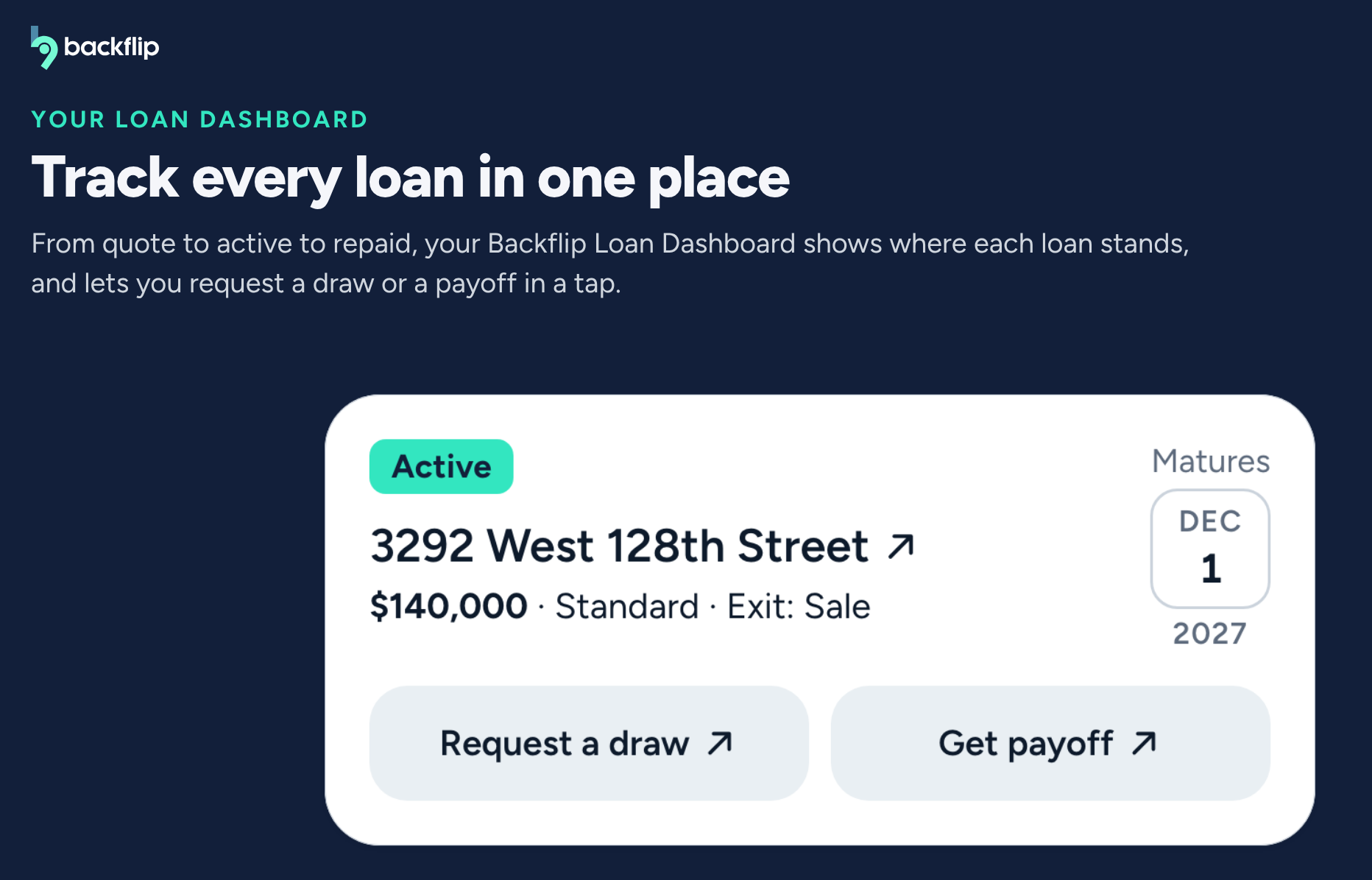
This is the step that turns your fix and flip into a cash-flowing asset. A DSCR rental loan pays off your short-term financing and replaces it with long-term rental financing, underwritten on the property’s cash flow rather than your personal debt-to-income (DTI) ratio. With Backflip, you submit the property in the Backflip Loan Dashboard under Loans, and a dedicated Account Executive follows up with your refinance terms. Backflip’s DSCR rental loan is currently available to investors who funded their flip directly with Backflip, which is one reason to start the project with Backflip: the same platform carries you from acquisition and rehab through the rental refinance, with no lender handoff in the middle.
6. Hold, manage, and repeat the BRRRR cycle
Once the refinance closes, you hold a stabilized rental with long-term financing, and the capital you pulled out in a cash-out refinance is free to deploy on your next distressed property. That is the full BRRRR loop: buy, rehab, rent, refinance, repeat. Investors who run the cycle with one lender build a track record that can unlock better terms over time, which is exactly how Backflip is built to reward repeat borrowers.
What is a DSCR loan, and why is it best for the BRRRR method?
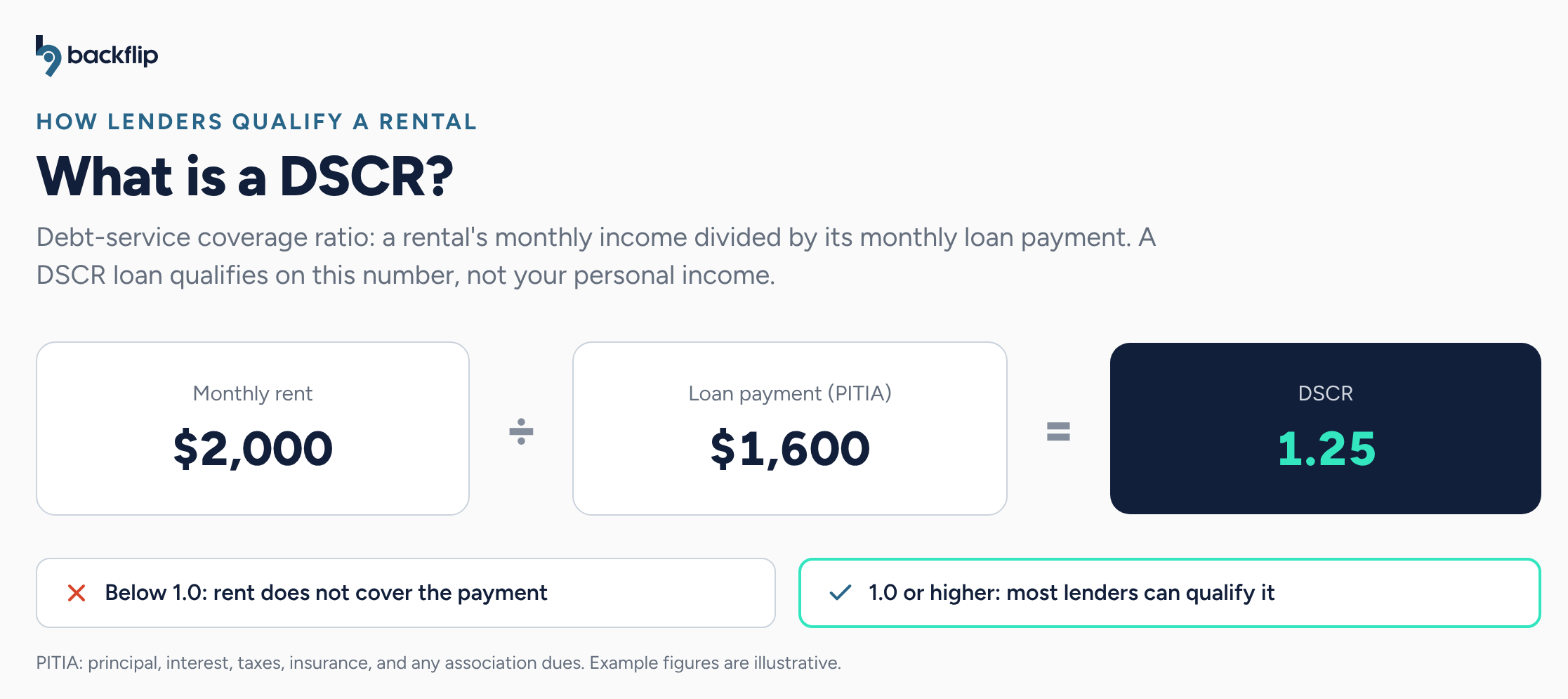
A DSCR loan is an investment property loan that qualifies on the debt-service coverage ratio, meaning the lender looks at whether the rent covers the mortgage payment rather than at your W-2 income, tax returns, or debt-to-income ratio. For self-employed real estate investors, fast-scaling flippers, or anyone already carrying several mortgages, that is the point: you qualify on the asset’s performance, not your personal paperwork.
That is also why a DSCR loan fits a finished flip so well. You have already forced equity and created a rent-ready asset, so the income is real and the property supports the loan. Backflip offers DSCR rental loans alongside its fix and flip financing, so the same lender that funded your renovation can refinance you into the long-term hold, with one team and one track record across both loans.
Why refinance your rental property with Backflip?
The hardest part of the BRRRR strategy is the handoff between two loans: the short-term hard money loan and the permanent rental financing. Most investors use two different lenders, so they rebuild their file and pay duplicate fees each time. Backflip removes that handoff.
- One platform for the whole real estate cycle. Analyze the deal as a rental, fund the flip, and refinance into a DSCR rental loan without switching lenders.
- Free investment analysis. The Backflip app includes ARV estimates, rent comps, and profit and ROI forecasting at no cost, so you can confirm the rental works before you commit.
- Qualify on the asset, not your tax returns. A DSCR rental loan is underwritten on the property’s cash flow, which helps self-employed and scaling investors.
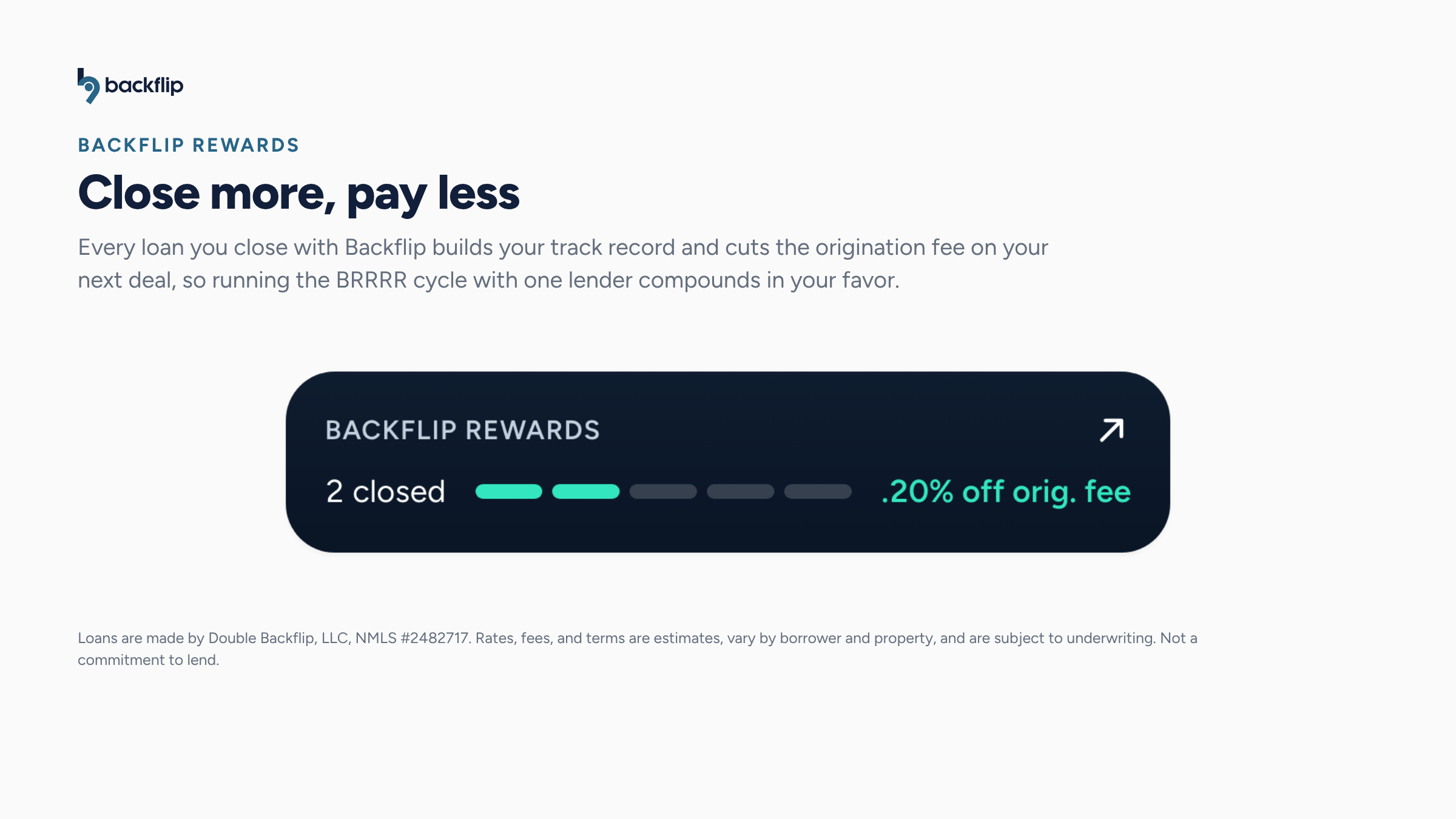
- A dedicated expert and a track record that carries over. You work with a real Account Executive, and the loans you close with Backflip build the history that can earn you better terms on the next deal.
Ready to map the rental exit on your project? Analyze your deal and explore Backflip’s real estate financing. For related guides, see the best fix and flip apps and the lowest-fee fix and flip loans.
Frequently asked questions
How do I turn my completed flip into a long-term rental?
To turn a completed flip into a rental, finish the rehab to a rent-ready standard, set your market rent using local rent comps, place a qualified tenant on a lease, then refinance your short-term fix and flip loan into a long-term DSCR rental loan. With Backflip, you can analyze the rent in the app, then submit the property in your Loan Dashboard to refinance into a Backflip DSCR rental loan with a dedicated Account Executive.
What is a DSCR loan in real estate?
A DSCR (debt-service coverage ratio) loan is an investment property loan that qualifies on the property’s rental income rather than your personal income or debt-to-income ratio. If the rent covers the mortgage payment, a DSCR of 1.0 or higher, the property generally qualifies. Backflip offers DSCR rental loans alongside its fix and flip financing.
What are typical DSCR loan requirements?
DSCR loan requirements vary by lender, but they commonly include a DSCR at or above 1.0, a minimum credit score, a maximum loan-to-value, cash reserves, and a completed, leasable property with documented or appraised market rent. Because the loan is underwritten on the asset, personal income documentation is lighter than a conventional mortgage. Confirm exact requirements with your lender, which a Backflip Account Executive can walk you through for your specific deal.
Can I refinance my Backflip fix and flip loan into a DSCR rental loan?
Yes. Once your renovation is complete and the property is leasable, submit the project in your Backflip Loan Dashboard under Loans, and a dedicated Account Executive will follow up with refinance terms. Backflip’s DSCR rental loan is currently available to investors who funded their flip directly with Backflip, so keeping the whole project on one platform makes the rental refinance straightforward.
Can you do a cash-out refinance after a flip?
Often, yes. If the renovated property has enough equity and the rent supports the payment, a cash-out refinance can return part of your invested capital while placing long-term financing on the rental. The amount depends on the property’s value, your DSCR, and the program’s loan-to-value limit. This is the step in the BRRRR strategy that frees up capital for your next deal.
Do I need a tenant in place before I refinance a rental property?
A signed lease strengthens your DSCR refinance application because it documents the income the loan is underwritten on, and some lenders require it. Others allow an appraiser’s market-rent estimate in place of a signed lease. Either way, confirm the rent and your DSCR before you apply, which you can do with Backflip’s free deal-analysis tools.
What is the BRRRR strategy in real estate investing?
BRRRR stands for buy, rehab, rent, refinance, repeat. You buy a distressed property, renovate it to force equity, rent it to a qualified tenant, use a cash-out refinance to pull your capital back out, then repeat on the next deal. Turning a completed flip into a rental is the rent-and-refinance part of BRRRR, and Backflip supports the full cycle on one platform.
Is it better to flip a house or hold it as a rental?
It depends on your capital needs and goals. Flipping provides an immediate lump sum, while holding a rental provides monthly passive income, potential tax benefits, and long-term equity appreciation. Run both exits on the same property before you decide. The free Backflip app lets you model a sale and a rental side by side so you can compare the net profit of a flip against the cash flow and equity of a hold.
This article is for general information only and is not a loan offer, financial advice, tax advice, or a commitment to lend. Loan products, rates, and eligibility vary by borrower, property, and transaction and are subject to underwriting and applicable terms. DSCR, cash-out, and refinance availability depend on program eligibility. Consult a qualified tax or financial professional about your situation, and confirm current terms directly with any lender before applying.